The National Mall can take up an entire day before you realize how far you’ve walked. One museum becomes two. You stop for a photo at the Washington Monument, then spot the Lincoln Memorial in the distance and keep going.
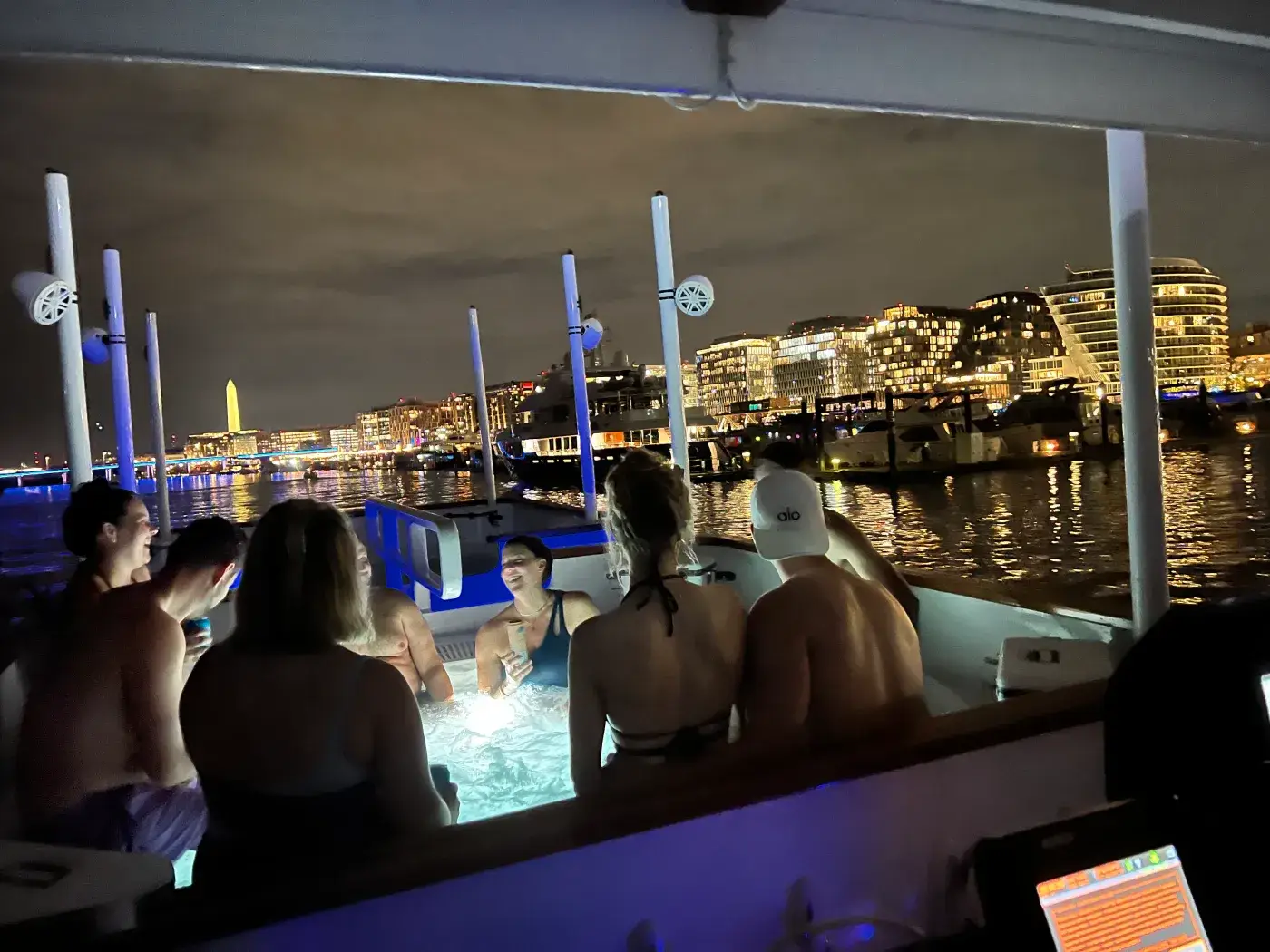
This guide helps you plan the walk, from Metro stops and restrooms to the monuments worth making time for. And when you’re ready to give your feet a break, you can take in DC’s waterfront views from a private hot tub boat on the Potomac.
Is It Better to See the National Mall on Foot or From the Water?
Walking is the way to explore the National Mall itself. You can step inside the Lincoln Memorial, read the inscriptions and follow your curiosity into a Smithsonian museum. The two-mile route takes about 45 minutes without stops, but you’ll want much longer if you plan to enjoy what comes along with it. Be mindful that crowds can slow you down, especially around the best-known memorials.
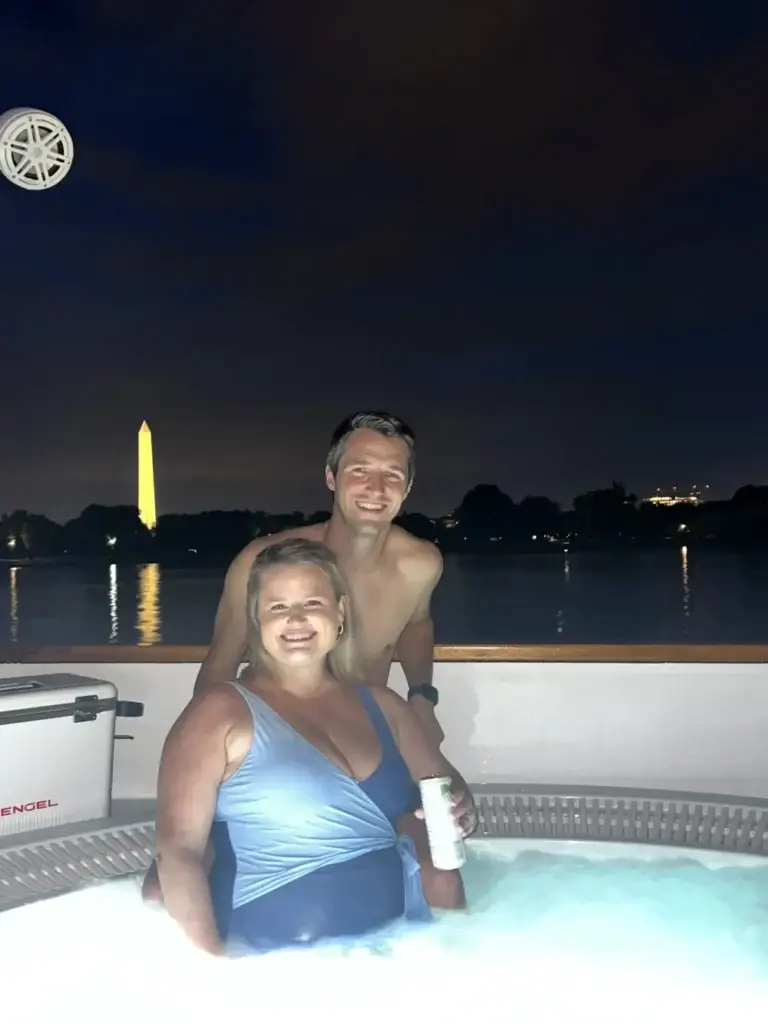
A cruise shows you DC from another angle at your own leisurely pace in privacy. From the Potomac, you can watch the Washington Monument rise above the skyline while you relax in a warm, private tub with your group. Bring your playlist and settle in; the captain takes care of the route.
You can fit both into the same day. Explore the Mall on foot, then head to The Wharf for an evening on the water. Explore DC hot tub boat cruises when you’re planning your visit.
To plan the walking part, it helps to know what people mean by “the National Mall.”
What Is the National Mall?
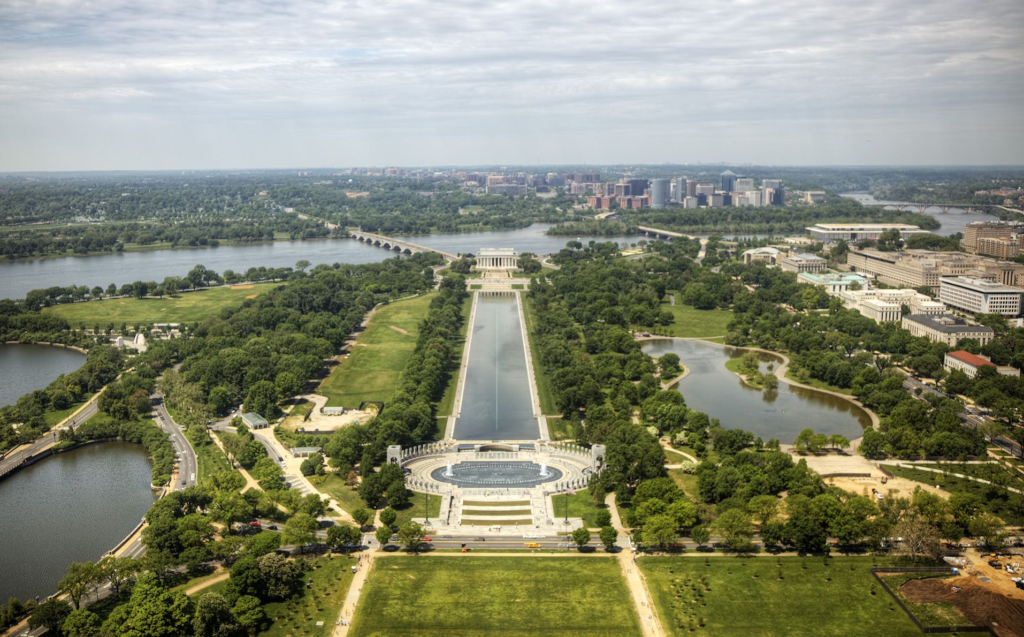
Officially, the National Mall belongs to National Mall and Memorial Parks, a Park Service site of over 1,000 acres. The park runs from the foot of the Capitol to the Potomac River. It also takes in the Tidal Basin and the memorials around it.
Locals, though, use “the Mall” for the long lawn between the Capitol and the Lincoln Memorial. The Washington Monument stands roughly in the middle. The park’s size is hard to picture until you stand at the Capitol and look west. From there, the Washington Monument is a full mile away, and the Lincoln Memorial is another mile beyond it. The whole layout goes back to Pierre L’Enfant’s 1791 plan for the capital, which called for a broad, open avenue.
The easiest way to plan a visit is to split the Mall in half. Between the Capitol and the Washington Monument, the Smithsonian museums line both sides of the lawn. West of the monument, the museums give way to the war memorials and the Lincoln Memorial. Meanwhile, the Tidal Basin memorials sit just to the south.
Which National Mall Monuments Should You See, in Order?
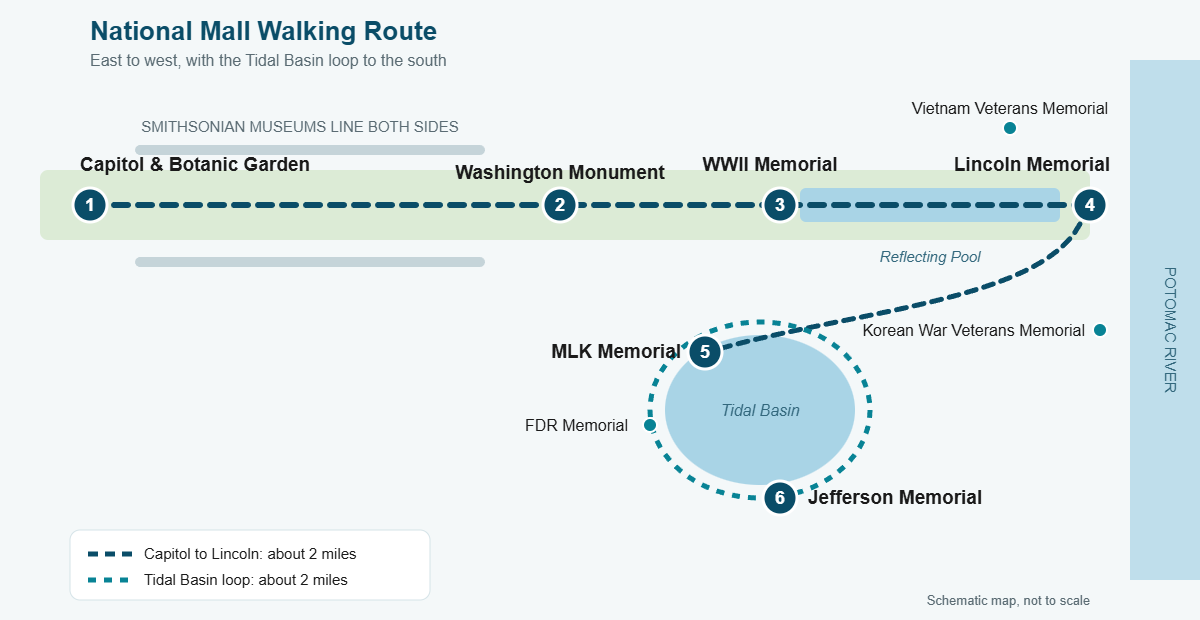
See the National Mall monuments from east to west. Start at the Capitol and the U.S. Botanic Garden, then walk to the Washington Monument. Next come the World War II Memorial and the Lincoln Memorial. Finish with the Tidal Basin loop to the south.
Walking in that direction means you reach the Lincoln Memorial last. If you time it right, you’ll be sitting on those steps as the sun goes down behind you. We’ve also written longer visitor guides for several of the stops along the way.
The Capitol End and the U.S. Botanic Garden
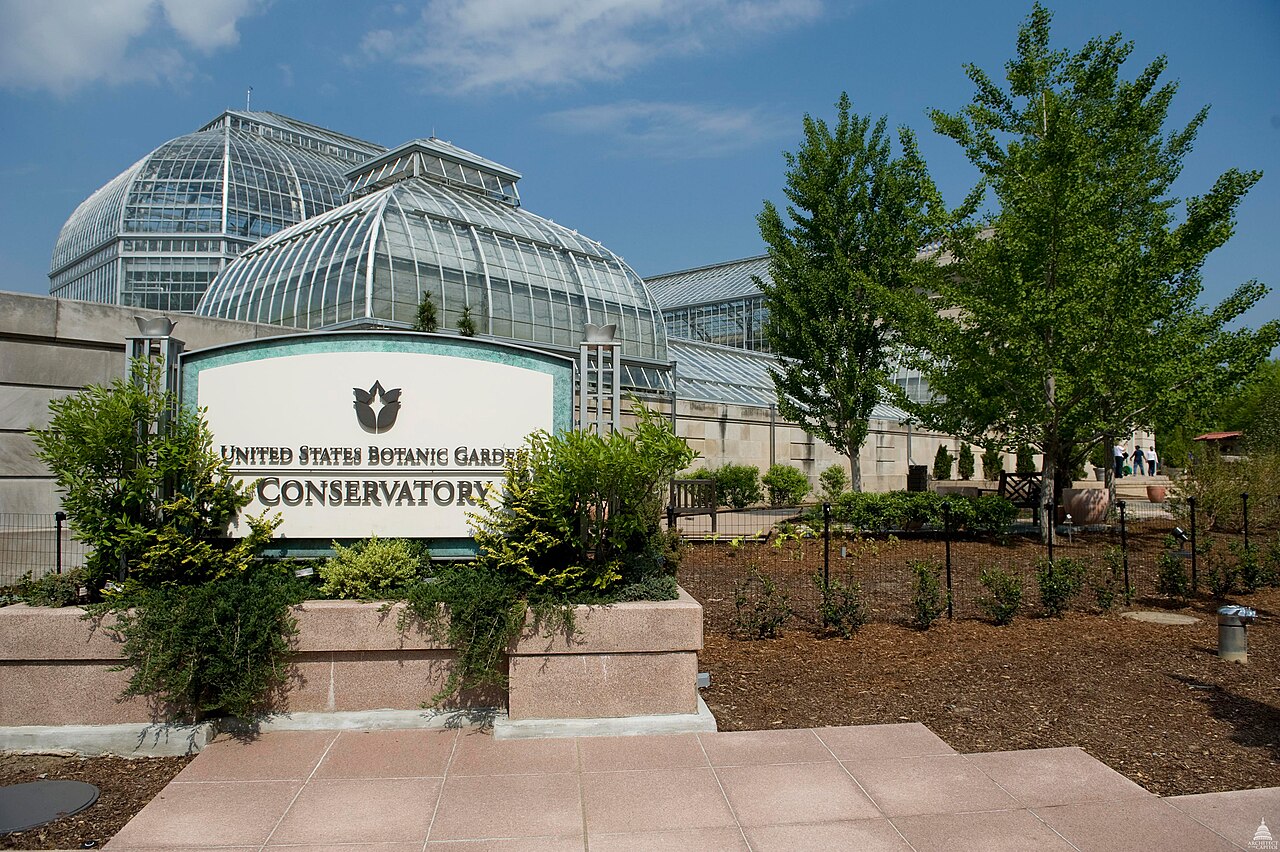
Begin at the foot of Capitol Hill, where the Capitol Reflecting Pool gives you a straight-on view of the dome. The U.S. Botanic Garden is right next door, and it’s free. Its glass conservatory stays warm all year, so it’s a good first stop on a cold or rainy morning. From the front door, head west, and the museums start lining up on both sides of you.
The Washington Monument
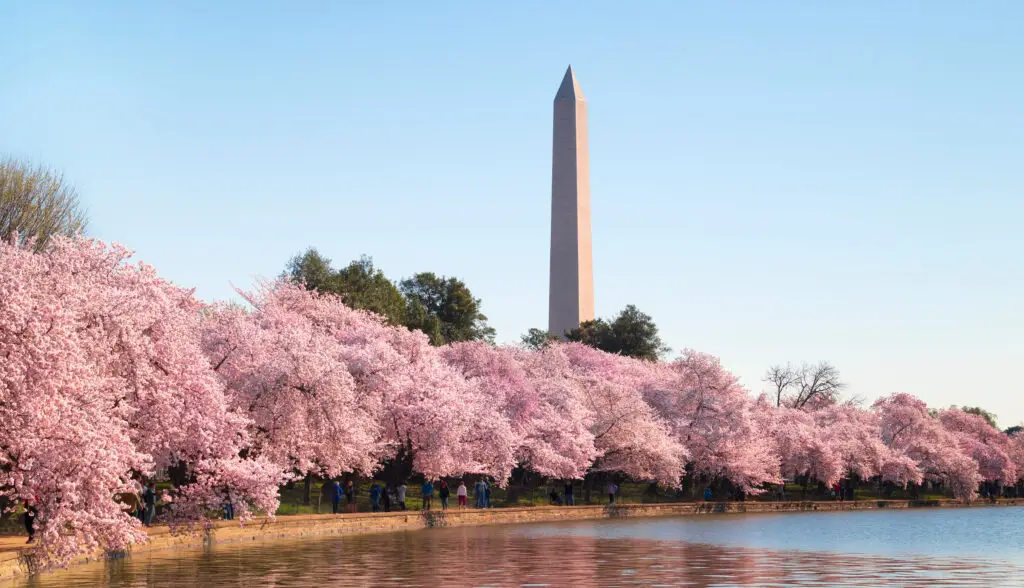
About a mile in, you reach the Washington Monument. At just over 555 feet, it’s the one landmark you can see from nearly anywhere on the Mall. Look about a third of the way up, and you’ll notice the stone changes color. Construction stalled for more than two decades around the Civil War. When work started again, the builders used marble from a different quarry.
Getting to the top takes a timed ticket, and the last entry is at 4 p.m. Our Washington Monument visitors guide walks through the ticket options and the view from the observation level. Even if you skip the elevator, climb the small hill around the base. From there, you can see the whole Mall, from the Capitol dome to the Lincoln Memorial, just by turning around.
The World War II Memorial and the Reflecting Pool
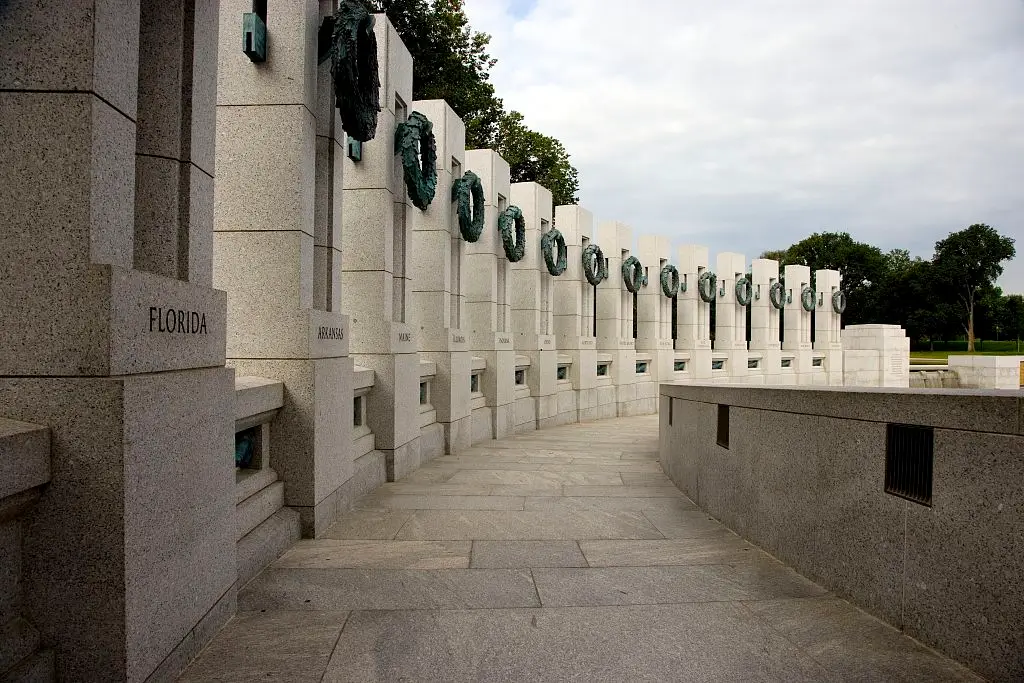
A few minutes west, the World War II Memorial circles a fountain plaza at the end of the Reflecting Pool. Around the plaza stands a pillar for each state and territory. On the west side, the Freedom Wall holds 4,048 gold stars. Each star stands for 100 of the 405,399 Americans who died in the war. From the memorial’s western edge, the Reflecting Pool runs more than 2,000 feet to the Lincoln Memorial. The path along either side of the pool is the most photographed walk on the Mall, so expect company.
Before you head down the pool, cross 17th Street to the corner of Constitution Avenue. There, you’ll find the small stone Lockkeeper’s House. It’s the oldest building on the Mall, left over from the days when a canal ran through here.
The Lincoln Memorial and the Nearby War Memorials
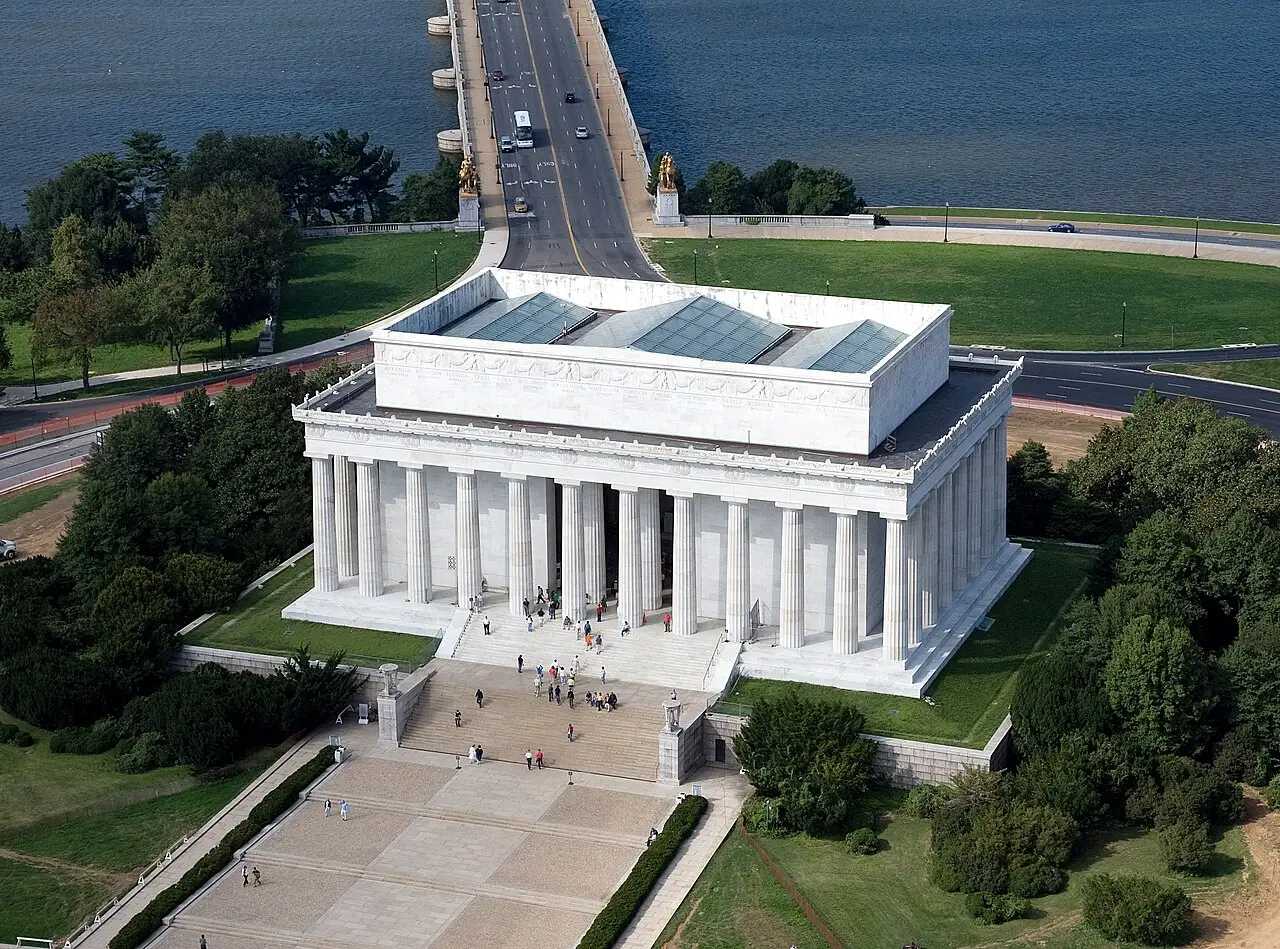
At the far western end, the Lincoln Memorial looks back toward the Washington Monument and the Capitol. The view from the top step is the one everyone comes for. Inside, the seated Lincoln statue stands 19 feet tall. Around it are 36 columns, one for each state in the Union when Lincoln died. Look down as you climb, too. An engraving on the steps marks where Dr. Martin Luther King, Jr. gave his “I Have a Dream” speech in 1963.
Midday gets crowded, and our Lincoln Memorial visitors guide has tips for timing your visit around the tour buses. Before you leave, walk a few minutes north to the Vietnam Veterans Memorial. Its black granite wall carries more than 58,000 names. Nearby, the Vietnam Women’s Memorial honors the 265,000 women who served. Then head a few minutes south to the Korean War Veterans Memorial. There, 19 stainless steel soldiers in ponchos move through a field of juniper as if on patrol.
By the time you reach the Lincoln Memorial, your feet may be ready for a break. Book a DC hot tub boat tour for that evening. You’ll see the same memorials from warm water while the captain does the steering.
The Tidal Basin Memorials
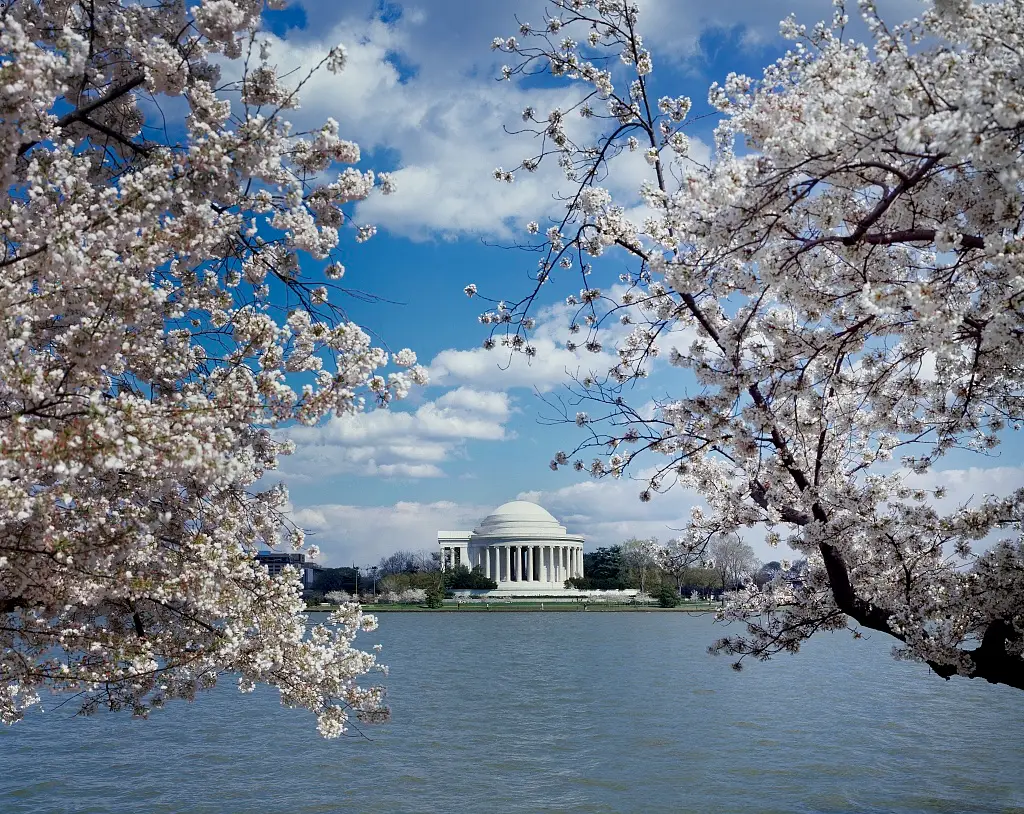
South of the Lincoln Memorial, a loop around the Tidal Basin starts at the Martin Luther King, Jr. Memorial. From there, it winds through the outdoor rooms and waterfalls of the Franklin Delano Roosevelt Memorial. The loop ends at the domed Jefferson Memorial across the water. Two figures here stand out above the rest. One is the 30-foot Stone of Hope at the King memorial. The other is the 19-foot bronze Jefferson in his rotunda. If the Jefferson is on your list, our Jefferson Memorial visitors guide shows the easiest walking route. It also points out the best spot for a view across the basin.
Come in spring, and you’ll find the city’s famous cherry trees here. They’re part of the more than 3,000 that bloom around the Mall each year. The festival that celebrates them pulls in over a million visitors. Our cherry blossom guide covers when to go and how to avoid the biggest crowds.
How Long Does It Take to Walk the National Mall?
Plan on three to four hours to walk the National Mall with stops. Without stops, the two-mile walk from the Capitol to the Lincoln Memorial takes 40 to 50 minutes.
The walking itself goes faster than people expect, since the stops take up most of your time. Walking times between the major stops look like this:
| Walking Leg | Distance | Walking Time |
|---|---|---|
| Capitol to Washington Monument | About 1 mile | About 20 minutes |
| Washington Monument to Lincoln Memorial, via the World War II Memorial | About 1 mile | About 20 minutes |
| Lincoln Memorial to the Vietnam or Korean War memorials | A few hundred yards | A few minutes each way |
| Lincoln Memorial to the Martin Luther King, Jr. Memorial | About half a mile | About 10 minutes |
| Full loop around the Tidal Basin | About 2 miles | About 45 minutes |
With the walk back to Metro, a full day on the Mall covers four or five miles. So wear shoes you trust. In summer, bring more water than you think you need, since the open lawns have very little shade.
Which Smithsonian Museums Are on the National Mall?
Most of the Smithsonian’s DC museums line the eastern half of the National Mall. Every one of them is free. Most are open from 10 a.m. to 5:30 p.m. every day except December 25. Two of them require free timed-entry passes.
Along the lawn between the Capitol and the Washington Monument, you’ll find the following:
- National Museum of Natural History: dinosaur fossils, the ocean hall, and the 45.52-carat Hope Diamond.
- National Museum of American History: the original Star-Spangled Banner, a 30-by-34-foot flag. It inspired the national anthem.
- National Museum of African American History and Culture: the newest museum on the Mall, near the Washington Monument. A timed-entry pass is required.
- National Air and Space Museum: the Wright brothers’ 1903 Flyer and the Apollo 11 command module. Timed passes are required here, too.
- National Museum of the American Indian: at the Capitol end, with a café serving Native dishes.
- Hirshhorn Museum and Sculpture Garden: modern and contemporary art in a round building, with a sunken sculpture garden.
- National Museum of African Art and National Museum of Asian Art: two smaller museums side by side. Both are usually quiet.
Don’t try to see them all in one day. Two or three museums are plenty to explore before your attention starts to fade. Instead, pick one big museum for the morning and spend the afternoon at the western memorials. Then save the rest for your next trip.
Where Can You Park Near the National Mall?
You can park near the National Mall, but nearly every space is metered. The one free option is a stretch of over 500 spaces around Hains Point. On busy days, Metro is usually faster than driving.
Inside the park, meters cost $2.30 an hour from 7 a.m. to 8 p.m. every day except December 25. Spots closer to downtown allow three hours, while the ones farther out allow six. The meters only take credit cards, debit cards, or the ParkMobile app.
You’ll find meters along Constitution Avenue, Independence Avenue, Madison Drive, and Jefferson Drive. They also cover Ohio Drive in West Potomac Park, the Tidal Basin lot, and the East Potomac Park lots. The free spaces are on Ohio Drive in East Potomac Park, and locals know about them. They fill early on nice weekends. They’re also a good walk from the main memorials, so they suit visitors starting at the Tidal Basin.
Even the Park Service suggests taking transit instead of driving on busy days. After watching cars circle Ohio Drive every spring weekend, we’d say the same.
Which Metro Stops Are Closest to the National Mall?
Smithsonian station is the closest Metro stop to the National Mall. It sits on the Blue, Orange, and Silver lines. Several other stations are a short walk away, so the best one depends on where you start.
The stations closest to the main sights are these:
- Smithsonian (Blue, Orange, and Silver lines): the escalator opens right onto the lawn, near the Washington Monument.
- Federal Triangle (Blue, Orange, and Silver lines): closest to the Natural History and American History museums.
- L’Enfant Plaza (Blue, Orange, Silver, Yellow, and Green lines): the best pick for Air and Space and the south side.
- Archives-Navy Memorial-Penn Quarter (Yellow and Green lines): near the National Archives and the eastern end.
- Foggy Bottom-GWU (Blue, Orange, and Silver lines): a 10- to 15-minute walk from the Lincoln Memorial.
What Are the Other Ways to Get Around the National Mall?
Besides walking, you can get around the National Mall by bike, e-scooter, or hop-on, hop-off bus. Each one saves your legs on the long stretch between the museums and memorials.
Two miles of lawn is a lot of ground. For that reason, the Park Service points visitors to Capital Bikeshare and hop-on, hop-off bus tours. Bikeshare docks are scattered around the Mall, too. A bike or an e-scooter gets you quickly through the long museum stretch. Then you can lock up and walk the memorials at the western end, where most of the crowds gather.
Looking for a National Mall map before you go? The Park Service maps page has an interactive map of accessible parking and another of bike racks. Once you’re there, the free NPS app will help you find your way.
There’s one more way to take in the Mall that doesn’t involve walking at all. Hot tub boat guests 21 and older can bring their own beer, wine, champagne, and seltzers. We supply the ice, coolers, and cups. So reserve a hot tub boat on the Potomac and end the day on the river.
Is the National Mall Accessible?
Yes, the National Mall is largely accessible. The ground is flat, and the paths are paved or packed gravel. The major memorials also offer elevators, accessible parking, or wheelchair loans.
At the Washington Monument, the elevator to the observation level is fully wheelchair accessible. Panoramic images inside the elevator show the view to anyone who can’t see out the windows. The Jefferson Memorial has a basement elevator that goes up to the chamber. Meanwhile, the Franklin Delano Roosevelt Memorial offers braille inscriptions, audio listening devices, and braille brochures.
Several memorials have accessible parking right beside them. On West Basin Drive, you’ll find spaces next to the Martin Luther King, Jr. and Roosevelt memorials. On East Basin Drive, there are spaces by the Jefferson. For the World War II Memorial, use Home Front Drive, which you reach from southbound 17th Street. Need a wheelchair for the day? You can borrow one at the King memorial bookstore with a state ID. The Korean War Veterans Memorial also lends them on a first-come, first-served basis.
Where Can You Eat at the National Mall?

You can eat at the National Mall at food kiosks, food carts, museum cafés, or a picnic on the lawn. The kiosk and cart options expanded in 2026.
This spring, a new concessions contract is turning eight kiosks into themed cafés and adding 25 food carts. You’ll find stands near the Natural History and American History museums and at Constitution Gardens. There are more by the Lincoln Memorial and the Jefferson Memorial. Look for grain and acai bowls near Natural History, charcuterie boxes at Constitution Gardens, and waffles by the Lincoln. The pizza-and-wine kiosk in front of Air and Space is staying put. Cherry blossom ice cream is on the menu all year, too.
If you’d rather sit down, the museum cafés are the easiest choice while the museums are open. The Park Service also lists a grill at the East Potomac Golf Course on Hains Point. It’s handy if you grab one of the free parking spots there. A picnic works, too, since the lawns around the Washington Monument have plenty of room.
Where Are the Restrooms on the National Mall?
The National Mall’s nine public restrooms are all west of 15th Street, near the major memorials. East of the Washington Monument, use the museum restrooms during open hours.
That detail catches a lot of visitors off guard. It leaves the whole stretch between the Washington Monument and the Capitol without a standalone restroom. The same plan calls for 12 new restrooms and three replacements. Work will start near the Lincoln Memorial and Constitution Gardens as funding becomes available.
Until those new restrooms open, our advice is to use the restroom every time you leave a museum. The next one could be a mile of lawn away.
What Are the National Mall Hours?
The National Mall is open 24 hours a day, every day of the year. Park rangers are on duty from 9:30 a.m. to 10 p.m. The Washington Monument and the museums keep their own hours.
The Washington Monument is open from 9 a.m. to 5 p.m. daily. It closes on July 4, December 25, and one day a month for maintenance. Tickets are free, but advance tickets carry a $1 service charge each. They go on sale daily at 10 a.m., up to 30 days out.
A small batch of free same-day tickets is also handed out each morning. Those go out at the Washington Monument Lodge on 15th Street, starting at 8:45 a.m. School and tour groups can reserve up to 55 tickets online, but they can’t get walk-up tickets.
When Is the Best Time to Visit the National Mall?
The best time to visit the National Mall is early morning or after dark, when the crowds thin out. Fall is the easiest season for walking the full route.
Early morning is the quietest time at the memorials, before the tour groups arrive. For photos, our Lincoln Memorial guide recommends golden hour, the last hour of light before sunset. After 9 p.m., the memorials are lit and the steps empty out. An after-dinner walk to the Lincoln is an easy evening plan. The Park Service also runs nighttime walks with a park ranger if you’d like some history with the view.
The hours don’t change much through the year, but the Mall does. Spring brings the cherry blossoms and the biggest crowds of the year around the Tidal Basin. Our list of things to do in DC in spring pairs well with a Mall day that time of year. Summer is hot and sticky on the open lawns, so early mornings and evenings matter even more. The Fourth of July draws the largest crowd of all. In winter, spend the coldest hours in a museum and catch the memorials at dusk.
What Is Worth Skipping on the National Mall?
If your time on the National Mall is short, you might want to skip the following:
- Counting on same-day Washington Monument tickets: the walk-up supply is small and usually runs out. Book online instead.
- Doing the Tidal Basin loop after the full Mall walk in summer: save the basin for a separate, cooler morning.
- Walking the length of the Mall twice: go east to west, then take Metro or the Wharf Shuttle back.
How Can You See the National Mall Monuments From the Water?

After exploring the memorials on foot, see DC from another angle on the Potomac. Our 90-minute hot tub boat cruises leave from The Wharf. Along the way, you can see the Washington Monument above the skyline and pass the Lincoln Memorial, Arlington Memorial Bridge and the Kennedy Center. The views and their order depend on the tide and river traffic.
Each tub is private to your group and holds up to 10 guests. Book both tubs if you’re bringing up to 20. The water stays at 102°F year-round, and each tub has its own Bluetooth sound system. Bring a swimsuit, a towel and a playlist. If you forget your towel, you can rent one. There’s a private changing room and bathroom on board, too.
Guests 21 and older can bring beer, wine, champagne or seltzer. We provide water, ice, coolers and cups at no extra charge, so there’s no need to carry supplies around the Mall all day.
Meet us at 650 Wharf Street SW, 15 minutes before your cruise. The free Wharf Shuttle stops near the Mall at Independence Avenue and 7th Street SW. Check its schedule before counting on it for an evening departure.
Want to see which landmarks you might spot? Read about our Lincoln Memorial, Jefferson Memorial and Washington Monument cruises. Then book your DC hot tub boat cruise and end your Mall day on the water.